Decoding Houston’s Salvage Scene for Diesel Repair Savings
Diesel truck repairs can sneak up fast, especially as fall hits and work, hunting trips, and holiday travel start stacking up. When a check engine light or transmission slip shows up, many drivers worry their truck will be parked for a long time. The good news is that smart use of auto parts salvage in Houston can keep repair plans realistic and your diesel on the road.
In our area, diesel trucks work hard all year. Long highway drives, hot traffic, heavy loads, and stop-and-go city driving all add up. By understanding how salvage parts work, where they come from, and how to choose them, you can cut repair stress and get more life out of the truck you already own.
Houston has one of the strongest truck and diesel scenes in the country, which means there are many used OEM engines, transmissions, and other components moving through local salvage suppliers. When used the right way, those parts can keep work trucks and daily drivers running strong without sacrificing reliability. We focus on recycled and remanufactured powertrain parts, and we see every day how the right salvage choice can save a repair that first felt out of reach.
In the sections below, we will walk through how to size up salvage suppliers, what to look for in diesel engines and transmissions, what a solid warranty should cover, and how to plan repairs so your truck is ready for fall events and the busy holiday season.
Why Diesel Drivers Turn to Auto Parts Salvage in Houston
Many diesel owners turn to salvage because they want their truck fixed right but do not want to spend more than the vehicle is worth. Buying a whole diesel engine or transmission new from the dealer can push a repair way over budget. Salvage lets you pick from quality OEM parts that already lived a working life, and that can be a smart path when you choose carefully.
Here are a few reasons diesel drivers look at salvage first:
- Lower cost than new dealer parts
- Better availability for certain engines and transmissions
- OEM design and fit, without aftermarket guesswork
- A way to keep older trucks running longer
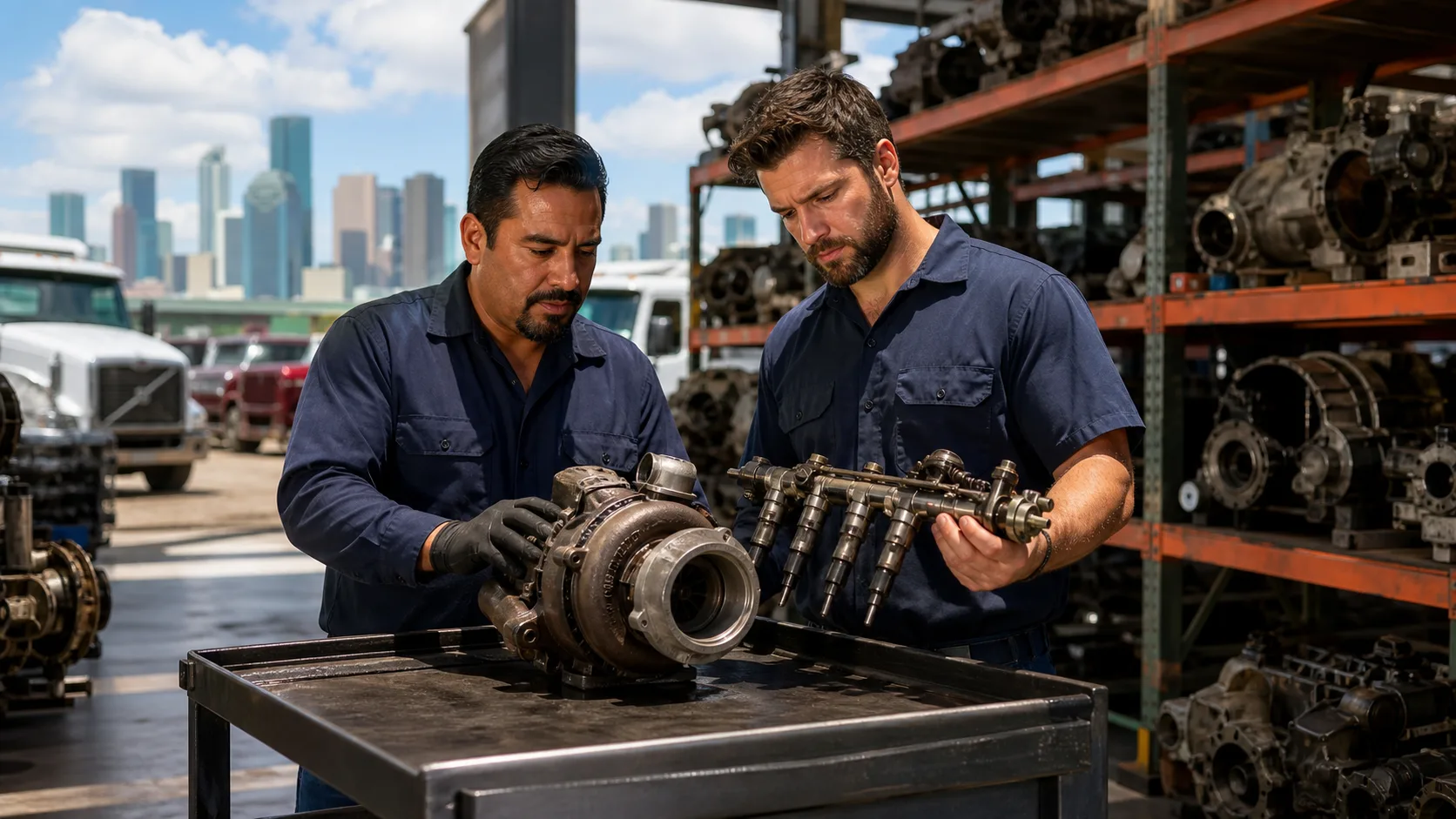
Houston’s large diesel market means more trucks end up at salvage with usable engines, transmissions, turbos, and fuel system parts. Many of these come from wrecked vehicles, insurance totals, or fleet trucks that were retired even though the powertrain still had life left.
Another big reason to go salvage is OEM quality. Recycled OEM parts keep the same factory design, sensors, and mounting points your truck was built with. That means the part is more likely to:
- Plug into factory wiring and control modules
- Work with your existing emissions setup
- Match the original performance and drivability
There is also the environmental side. Using recycled diesel components keeps working parts out of landfills and lowers the need for new manufacturing. Fleet managers and individual owners who care about waste like knowing they are stretching each engine and transmission as far as it can reasonably go.
How to Spot a Trustworthy Diesel Salvage Supplier
Not all salvage yards are the same, and that matters a lot when you are buying something as big as a diesel engine or transmission. You want a supplier that treats these parts as serious equipment, not scrap metal.
A trustworthy supplier usually has:
- Clear reviews and a solid local reputation
- Years of experience with engines, transmissions, and diesel powertrains
- A clean, organized yard and warehouse
- A real inventory system, not just rows of cars to pick through
There is a big difference between a simple pick-and-pull yard and a supplier that specializes in tested, cataloged engines and transmissions. When you need your truck back for work or family trips, you want someone who already pulled the part, checked it, and recorded its details.
Professional salvage operations also put real effort into testing and grading. On diesel engines, they may:
- Inspect fluids for metal or contamination
- Verify mileage and donor vehicle information when possible
- Listen for knocks, smoke, and other signs of trouble
- Note compression or leak-down test results where available
Transmissions should be checked for fluid color and smell, obvious leaks, and shifting behavior before removal. The supplier should then grade the component so you know if you are getting a strong low-mileage unit or something more worn that is priced and sold accordingly.
Warranty support is a key piece of this picture. A written warranty on diesel engines and transmissions, with clear time and mileage limits, shows that the supplier stands behind what they sell. Coverage details, including what happens if there is a failure and what labor support is included or excluded, help protect the money and time you put into the repair.
Choosing the Right Diesel Engine or Transmission From Salvage
Picking the right part is not guesswork, especially on modern diesel trucks with complex electronics and emissions systems. Matching to your VIN and OEM part number is one of the most important steps to avoid delays and redos.
You or your repair shop should confirm details like:
- Exact engine code or RPO code
- Emissions package and model year range
- Transmission model and gear ratio
- 2WD or 4WD configuration
Mixing the wrong emissions setup, gear ratio, or control module can lead to no-start conditions, warning lights, or a truck that never shifts quite right. A good salvage supplier will help you match part numbers and ask how your truck is used so they can recommend the best fit.
Before you decide, it helps to ask a few simple questions:
- What is the mileage on the donor vehicle, if known?
- Was the donor truck wrecked, flooded, or retired from a fleet?
- What tests were done before the engine or transmission was stocked?
- Which accessories are included, like turbo, injectors, sensors, or torque converter?
- Is the part recycled used OEM or remanufactured?
This is also the time to talk through installation needs. Many diesel powertrains need specific fluids, updated filters, new seals in certain spots, and sometimes software programming or resets during installation. Following the supplier’s and installer’s break-in steps helps your replacement part settle in smoothly.
Even though Houston does not get harsh winter conditions, fall is still a good time to think about seasonal readiness. Cooler mornings and longer drives to holiday events can reveal weak glow plugs, tired batteries, or slow cranking. When choosing a replacement engine, ask about:
- Glow plug condition and control system
- Block heaters, if your truck uses one for early starts on cool days
- Oil weight and service history
Planning the repair in early fall gives you time to sort out any small issues before a busy travel or work season.
Maximizing Value From Auto Parts Salvage in Houston
Once you pick a salvage engine or transmission, the next step is making sure it is installed and cared for the right way. That is where a good diesel shop comes in. Salvage parts still need skilled hands and proper tools so they can perform like they should.
Working with a shop that understands diesel systems and has real experience with salvage powertrain swaps can help with:
- Correct removal and installation procedures
- Programming or resets for control modules
- Proper fluid selection and filling
- Keeping detailed records for warranty needs
Good documentation, like repair orders and installation notes, makes it much easier to handle any future warranty questions. It also helps you track what was replaced and when, which matters a lot if the truck is part of a small business or light fleet.
After the repair, a few habits go a long way toward protecting your investment:
- Follow the shop’s recommended break-in routine
- Change fluids and filters early if the supplier suggests it
- Watch for new leaks, noises, or shifting changes
- Scan for codes if the truck feels different than normal
Clean fuel and quality diesel-specific fluids are especially important for recycled engines and transmissions. They help keep heat, friction, and contamination under control so your replacement parts can last.
Sometimes a recycled low-mileage engine or transmission is the perfect choice, especially on newer trucks that were totaled in a collision but had a healthy powertrain. Other times, a remanufactured unit makes more sense, like when your truck has a known common failure that reman builders address with updated parts and procedures. A knowledgeable supplier can walk through your budget, truck age, and how you use it to help point toward recycled or reman for each situation.
Take Control of Diesel Repair Costs with Smart Salvage Choices
Understanding how auto parts salvage in Houston works gives diesel owners and fleet managers more control over repair plans. Instead of feeling stuck between a big dealer bill or parking the truck for good, you can use recycled and remanufactured OEM powertrain parts to keep your rig working hard.
As fall schedules fill with trips, jobs, and holiday plans, it helps to look ahead at any warning signs your truck is giving you and think about engine or transmission needs early. Matching parts by VIN, choosing a trustworthy salvage supplier, and partnering with a skilled diesel shop can keep your truck ready without cutting corners on reliability.
At Airline Auto Parts in Houston, we focus on quality used OEM and remanufactured engines, transmissions, and other auto parts, backed by warranty support and nationwide shipping. Our team spends every day decoding part numbers, checking diesel inventory, and helping drivers and shops plan repairs that fit real-world needs.
Save Money And Keep Your Vehicle Running Longer
If you are looking for quality parts at a fair price, our auto parts salvage in Houston gives you a smart alternative to buying new. At Airline Auto Parts, we carefully inspect and inventory every component so you can buy with confidence. Tell us what you need and we will help you locate the right part quickly, or you can contact us for personalized assistance with your project.