

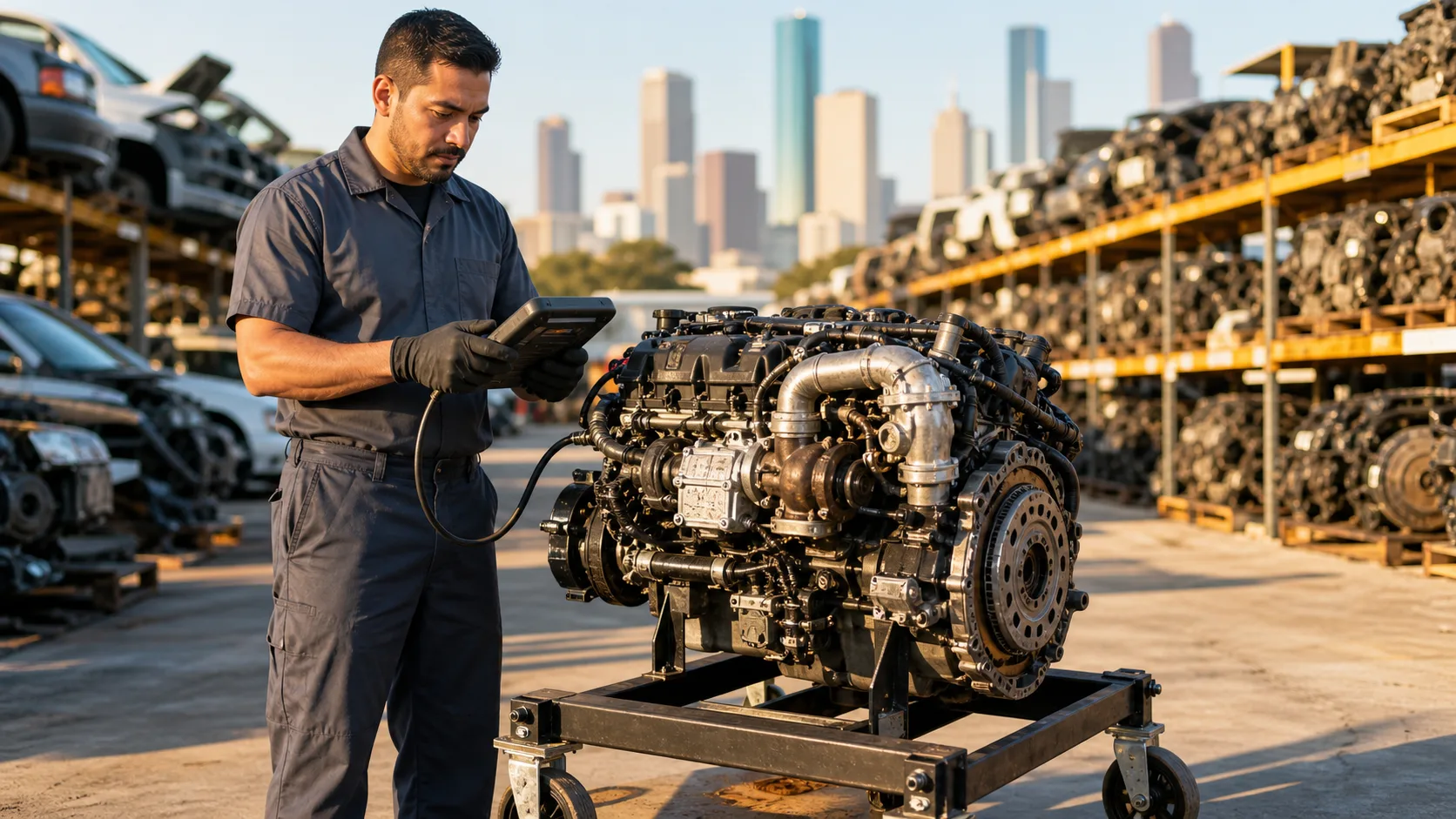
Passenger diesel engines are getting a fresh look from drivers who want strong power and long engine life. Many people like how diesels pull hard at low speeds, use less fuel on the highway, and keep going when they are cared for. If your current engine is getting tired, a used diesel from a salvage yard can be a smart way to keep your vehicle on the road.
Fall is a good time to plan an engine replacement or upgrade. The holiday travel season, school schedules, and busy work months are right around the corner. Handling an engine swap now gives you time to sort out parts, find a trusted installer, and fix small issues before they interrupt your plans.
Here in the Houston area, salvage yards supply used OEM passenger diesel engines that are pulled, checked, and prepared for reuse. Many buyers across the country turn to these recycled engines because they want original-equipment parts that have already proven themselves on the road. We will walk through how these engines get to salvage yards, how they are checked, and how you can choose one with confidence.
Passenger diesel engines work in a different way than gasoline engines. Instead of using spark plugs to light the fuel, diesels rely on very high compression inside the cylinder. The air is squeezed so tight that it gets hot, and when diesel fuel is added, it lights on its own.
A few key differences stand out:
For everyday drivers, that design brings real-world benefits:
There are also a lot of myths about diesel engines. Many people still think they all rattle loudly or create heavy smoke. Modern passenger diesels, especially those with updated emissions systems, are much cleaner and quieter than older designs. With proper care, they can run smoothly and cleanly in daily traffic.
Because diesel engines are built with heavy-duty parts and often run for many miles, they are good candidates for reuse. When a used OEM diesel engine is inspected and tested correctly, it can be a strong replacement that keeps a vehicle on the road for years instead of ending up as waste.
Most diesel engines do not show up at salvage yards because they failed. They usually arrive still running, but the vehicles around them have bigger problems. Common reasons include collision damage, insurance totals, or repair estimates that are higher than the value of the vehicle. Some flood vehicles also arrive, although those engines need special care when evaluated.
When a diesel vehicle reaches a yard, the team looks at it closely to decide if the engine is a good candidate for reuse. They may check:
Once an engine is marked as promising, the dismantling process starts. Careful removal helps protect the engine, transmission, turbocharger, and related parts like the high-pressure fuel pump. Lines are disconnected in the right order, fluids are drained, and wiring is labeled so that the engine can be stored and shipped safely.
Reusing these engines is also better for the environment. Every recycled engine means less new material has to be made, and fewer usable parts end up in landfills. It is a practical way to support reuse while still getting a dependable powertrain.
After removal, a used diesel engine needs a proper checkup. Visual inspection comes first. The team looks for cracks in the block or head, damaged mounting points, and leaks around seals and gaskets. Oil and coolant are checked for signs of contamination, such as thick sludge or mixing of fluids.
Functional testing and compression checks give a clearer picture of engine health. Some key steps can include:
Cold starts matter, even in a warm climate. An engine that fires quickly and settles into a smooth idle after sitting for a while often points to good compression and healthy fuel delivery. Test results, along with mileage and engine codes, are recorded so that each engine can be graded in a standard way.
At a reputable yard, the goal is to remove guesswork. When an engine is offered for sale, buyers should be able to see the testing notes and understand what they are getting. Clear grading and available warranty options help build confidence before an engine ever leaves the yard.
Picking a replacement diesel is not only about grabbing an engine that looks similar. Matching it to your vehicle is key to a smooth swap. You or your installer should confirm:
When you compare options, look at condition and value together. Lower mileage is nice, but a slightly higher mileage engine with good test results and clear maintenance signs can be a strong choice. Pay attention to:
It is also helpful to ask which parts come with the engine. Some buyers want the turbo, injectors, and high-pressure pump included so everything stays matched. Fall is a smart time to get this done, since you can plan the install before busy holiday trips and long highway runs. While planning, make sure your installer checks the glow plugs, coolant system, and other supporting parts to keep things reliable.
Once your recycled diesel engine is in place, how you care for it matters. Good habits can add a lot of life to a used engine. Simple steps go a long way:
Modern passenger diesels often have systems like EGR, DPF, and SCR to manage emissions. These parts need proper driving habits to stay healthy. Regular highway runs, not just short stop-and-go trips, can help keep the exhaust system clear and working as designed.
Working with an installer who knows diesel systems is important. Correct installation, proper first startup, and a follow-up inspection help protect your engine and support any warranty from the supplier. With routine maintenance and a bit of attention, a recycled diesel engine can deliver strong performance, good fuel economy, and long life for many miles to come.
If you are ready to upgrade or replace a diesel powertrain, we can help you find reliable passenger diesel engines that match your vehicle and budget. At Airline Auto Parts, our team works with you to confirm compatibility so you can move forward with confidence. Reach out with your questions or request a quote anytime, and we will respond with clear options. For fast assistance, simply contact us and let us know what you are working on.

October 20, 2026 When Insurance Payouts Fall Short, Salva...

Seasonal Buying Strategy for Used Truck ...
October 13, 2026 Houston Truck Seasonal Checklist: Used P...
Decoding Passenger Diesel Engines at Hou...
October 6, 2026 Decoding Houston Auto Parts Salvage for ...

How Houston Salvage Yards Price Parts: N...

September 29, 2026 Decoding Used Automatic Transmission War...

Unexpected Ways Houston Auto Parts Salva...
September 22, 2026 Diesel Engines Houston TX Drivers Rely o...

Off-Season Stockpiling for Houston Fleet...