

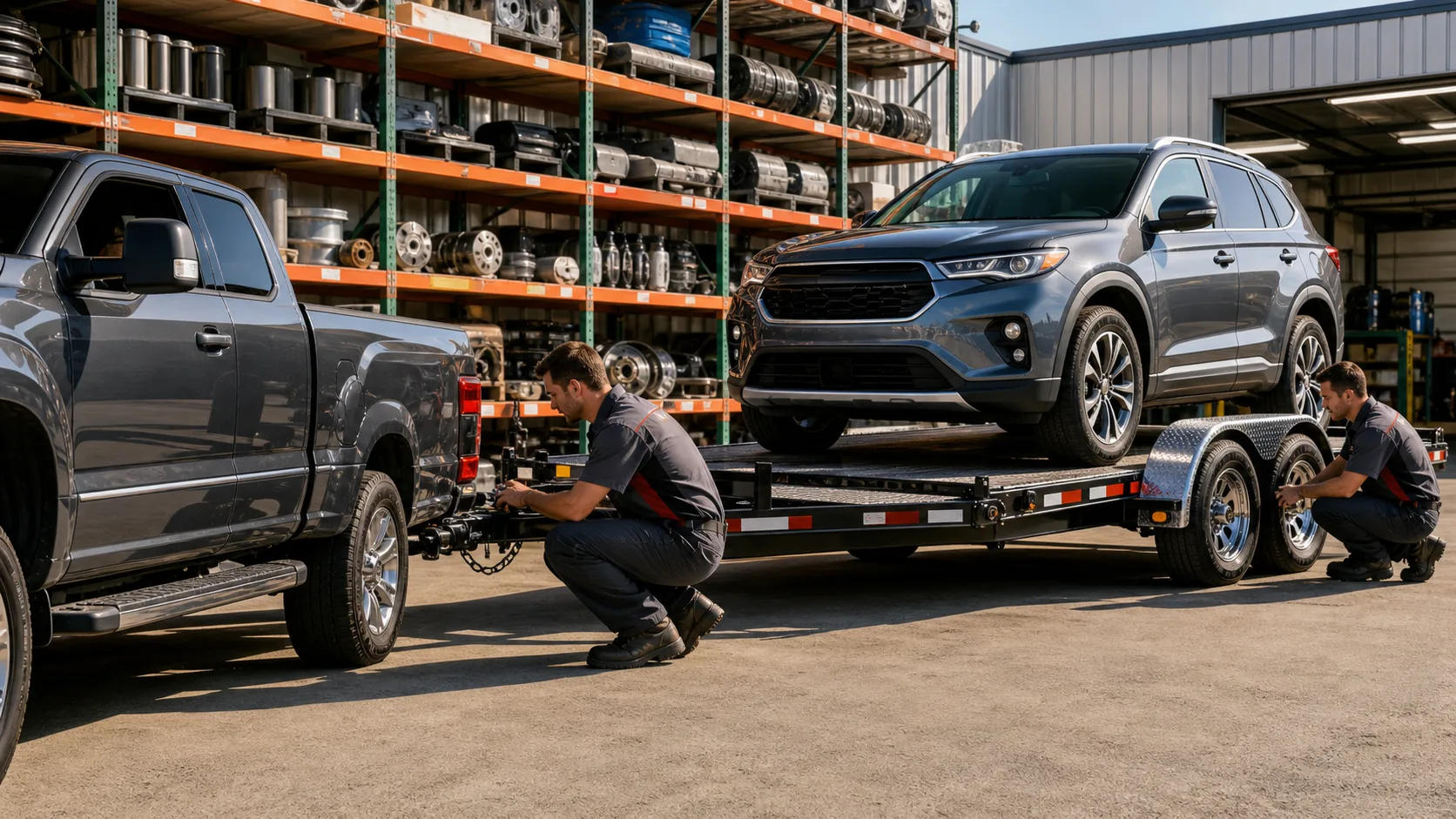
Passenger diesel engines can make towing feel calmer and more controlled, especially when you are pulling a boat, camper, utility trailer, work equipment, or car hauler. The big draw is low-end torque, which helps get a loaded trailer moving without making the engine work at high speeds right away.
Still, diesel is not automatically the right answer for every driver. We recommend looking at your loaded trailer weight, passenger and cargo load, travel distance, road conditions, and how often you plan to tow. Around Houston, November can bring holiday travel, hunting outings, cooler-weather camping, and end-of-year work projects, so it is a good time to think through what your vehicle really needs to handle.
The main strength of passenger diesel engines is their ability to produce pulling force at lower engine speeds. Instead of needing to rev high before the vehicle feels strong, many diesel vehicles deliver useful power earlier. That can make a difference when you are leaving a stoplight, merging into traffic, or climbing a grade with a trailer behind you.
With a properly matched transmission, axle ratio, hitch, and trailer brake setup, a diesel vehicle may need fewer downshifts than some gas-powered vehicles. That does not mean every diesel will feel effortless with every trailer, but the steady pulling feel is one reason many frequent towers prefer diesel power.
Downhill control also matters. Diesel engines often have strong compression braking, and some vehicles include an exhaust brake system. These features can help the tow vehicle hold speed on a descent and reduce how much work the brakes must do. Safe speeds and functioning trailer brakes are still a must.
Not all diesel vehicles belong in the same towing category. A smaller diesel SUV may be a sensible match for a light camper or utility trailer, while a larger travel trailer or loaded equipment trailer may call for a full-size diesel truck. Before trusting the torque, we suggest reviewing the exact manufacturer ratings for the vehicle you own or plan to buy.
A vehicle can feel powerful enough to pull a trailer and still be overloaded. Towing capacity is only one number in a much bigger picture. Payload, hitch rating, axle limits, tire load ratings, suspension, cooling capacity, and braking all affect whether a towing setup is safe and manageable.
Here are the ratings we recommend reviewing before you hook up:
Trailer tongue weight can take up a meaningful part of available payload. Add people, luggage, tools, bed cargo, a hitch, and other accessories, and the remaining capacity can disappear quickly. This is why a tow vehicle with a high towing number may still fall short when the payload number is too low.
We also encourage drivers to weigh the loaded vehicle and trailer instead of relying only on an empty trailer label or a rough guess. Camping gear, water, fuel, work equipment, supplies, and cargo can make a trailer much heavier than expected.
The supporting equipment matters just as much as the engine. Depending on the setup, you may need a properly rated hitch, a weight-distribution hitch, trailer brake controller, tow mirrors, transmission cooling, and tires suited to the load. When replacing a transmission, cooling component, axle, or driveline part, the replacement needs to match the vehicle’s specifications and towing use.
For drivers who spend a lot of time on the highway or tow moderate loads regularly, a passenger diesel can make sense because it may use fuel efficiently under load. That can be especially appealing for long trips with a camper, trailer, or work equipment.
Diesel ownership also comes with added responsibility. Modern diesel vehicles can have more complicated fuel, turbocharger, and emissions-related systems than a comparable gas vehicle. High-pressure fuel components, diesel particulate filters, exhaust sensors, and related parts need proper service. When something fails, repairs can be more involved.
Regular use matters, too. Many newer diesel vehicles need the right driving conditions to complete emissions-system regeneration cycles. Repeated short trips, poor-quality fuel, skipped service, or ignored warning lights can lead to bigger problems later. We recommend following the manufacturer’s schedule for oil changes, fuel filters, fluids, and diesel-specific maintenance.
For older or higher-mileage tow vehicles, quality used and recycled parts can be worth considering when a major repair is needed. At Airline Auto Parts, we help Houston-area drivers and repair professionals locate compatible used engines, transmissions, turbochargers, axles, cooling components, and other replacement parts for many makes and models. Matching the part correctly can help you make a practical repair decision for the vehicle you already own.
The best towing vehicle depends on your real routine, not just the fuel type on the badge. A driver who pulls a small utility trailer once in a while has different needs than a contractor moving equipment every week. A family taking a travel trailer across Texas may also need a different setup than someone hauling a boat for short weekend trips.
A passenger diesel may be a smart fit if you:
On the other hand, a properly rated gas-powered vehicle may be more practical if you tow only once in a while, mainly take short trips, prefer a lower-complexity powertrain, or do not need diesel-level torque. Gas engines can tow safely and effectively when the trailer is matched to the vehicle’s ratings.
Before November holiday travel, work trips, or outdoor weekends, we suggest having the whole towing setup inspected. Check the battery, tire pressure, trailer lights, brake controller, hitch hardware, coolant level, transmission fluid condition, and spare tire. Houston’s heat and humidity can be tough on vehicle components throughout the year, so routine inspections should not wait for a major trip.
Diesel power can be a real towing advantage, but it is only one part of a safe setup. Start with the loaded trailer weight, then compare it with towing capacity, payload, hitch limits, tire ratings, and the condition of the vehicle’s braking, cooling, and driveline systems.
Before buying a tow vehicle or replacing a major component, gather the vehicle year, make, model, engine size, transmission information, and VIN details when available. Those details help confirm that the vehicle, trailer, and replacement parts are suited to work together safely.
At Airline Auto Parts, we can help you compare available passenger diesel engines for the demands of your towing setup. Our team can help identify compatible replacement options based on your vehicle information and intended use. If you need assistance narrowing down the right fit, contact us for knowledgeable support.
November 3, 2026 Are Passenger Diesel Engines a Smart Cho...

October 20, 2026 When Insurance Payouts Fall Short, Salva...

Seasonal Buying Strategy for Used Truck ...
October 13, 2026 Houston Truck Seasonal Checklist: Used P...
Decoding Passenger Diesel Engines at Hou...
October 6, 2026 Decoding Houston Auto Parts Salvage for ...

How Houston Salvage Yards Price Parts: N...

September 29, 2026 Decoding Used Automatic Transmission War...

Unexpected Ways Houston Auto Parts Salva...
September 22, 2026 Diesel Engines Houston TX Drivers Rely o...